

In 2023, I brought a CXO into my team to lead a significant business function.
His title gave him full formal authority. The second line of leaders still did not respect him much. They spoke about him behind his back. When a critical business situation appeared, they looked toward other leaders rather than the person formally responsible for the function.
His intentions were genuine. That was never the problem.
He was also capable. When he took up a piece of work, he often handled it skillfully and in the right way. But he spent too much time cribbing about why something did not make sense. He was highly risk-averse and showed less agency than the role required. Pressing work was sometimes avoided or bypassed before it was eventually handled.
The gap was not competence alone. It was whether the team believed he would stay with a difficult situation when the path was unclear.
A title can settle reporting lines. It can give someone the right to approve, allocate, or direct. It cannot make people trust that person's judgment when the situation falls outside the prepared process. That trust comes from repeated conduct.
In this case, the conduct gradually unearned the influence that the rank was supposed to support. People complied when the title could enforce attention. They looked elsewhere when they needed someone to help them make sense of uncertainty.
When he moved on, the team was happy about it. That is uncomfortable to write because he was not malicious, lazy, or without skill. He was simply a poor fit for what that role demanded in that situation.
We did not replace him with another person carrying the same title. We restructured the business function differently.
The experience changed how I think about authority without rank. The function did not merely need someone who could exercise power from the top of an organization chart. It needed authority that would remain useful across situations, especially when there was no title available to enforce attention.
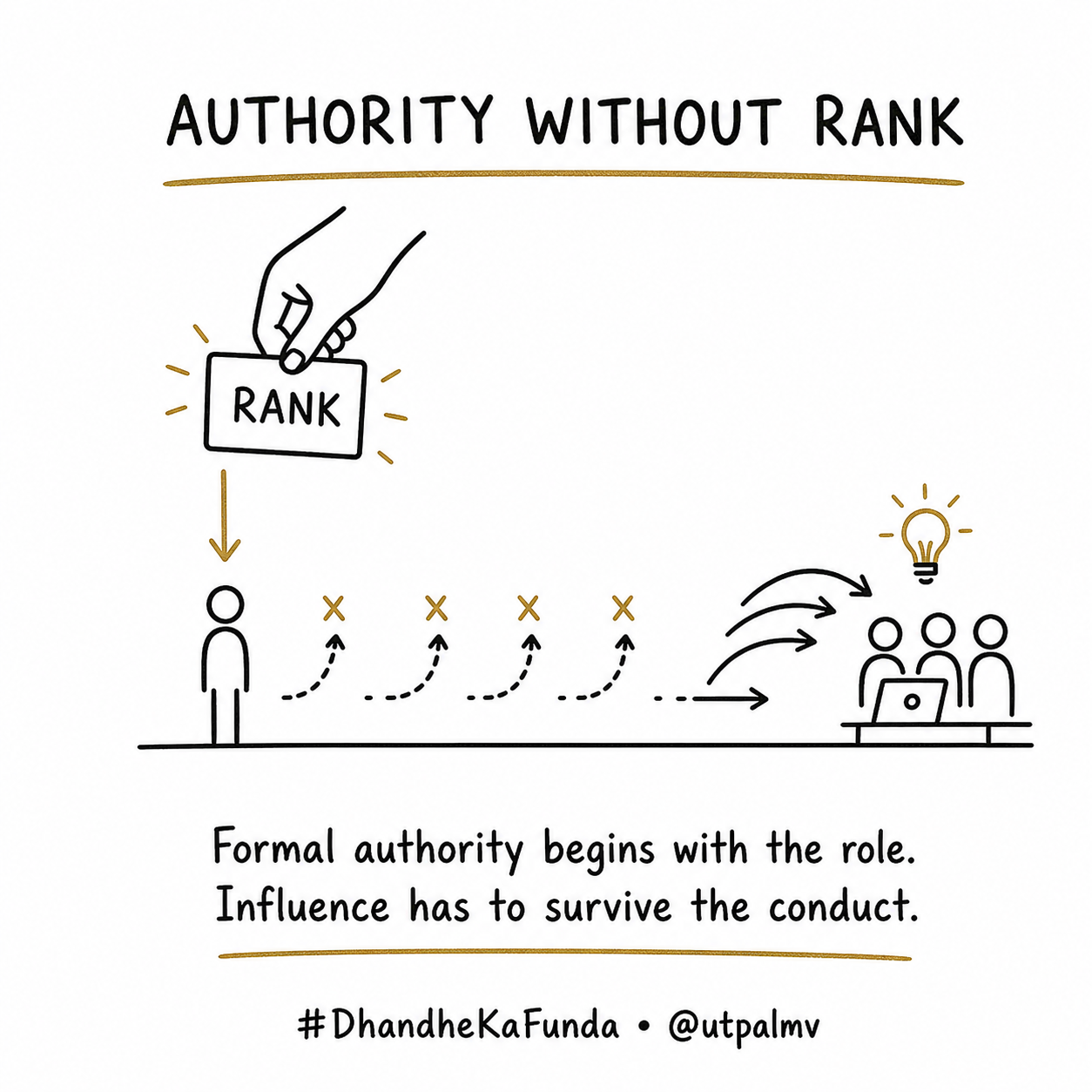
Formal authority begins with the role. Influence has to survive the conduct.
Use this workExplore with AI
Explore this journal
Take this work into your preferred AI system. Choose a ready-made prompt or add your own context. Nothing you enter here is sent or saved by utpalmv.com.
Use the work as a thinking lens without adding personal context.
Optional. Add details when you want the exploration grounded in your situation. Your context remains in this page and is included only in the prompt you copy.