

In March 2026, I noted that all-or-nothing thinking was a recurring trap for me. The broader list came from common descriptions of cognitive distortions.
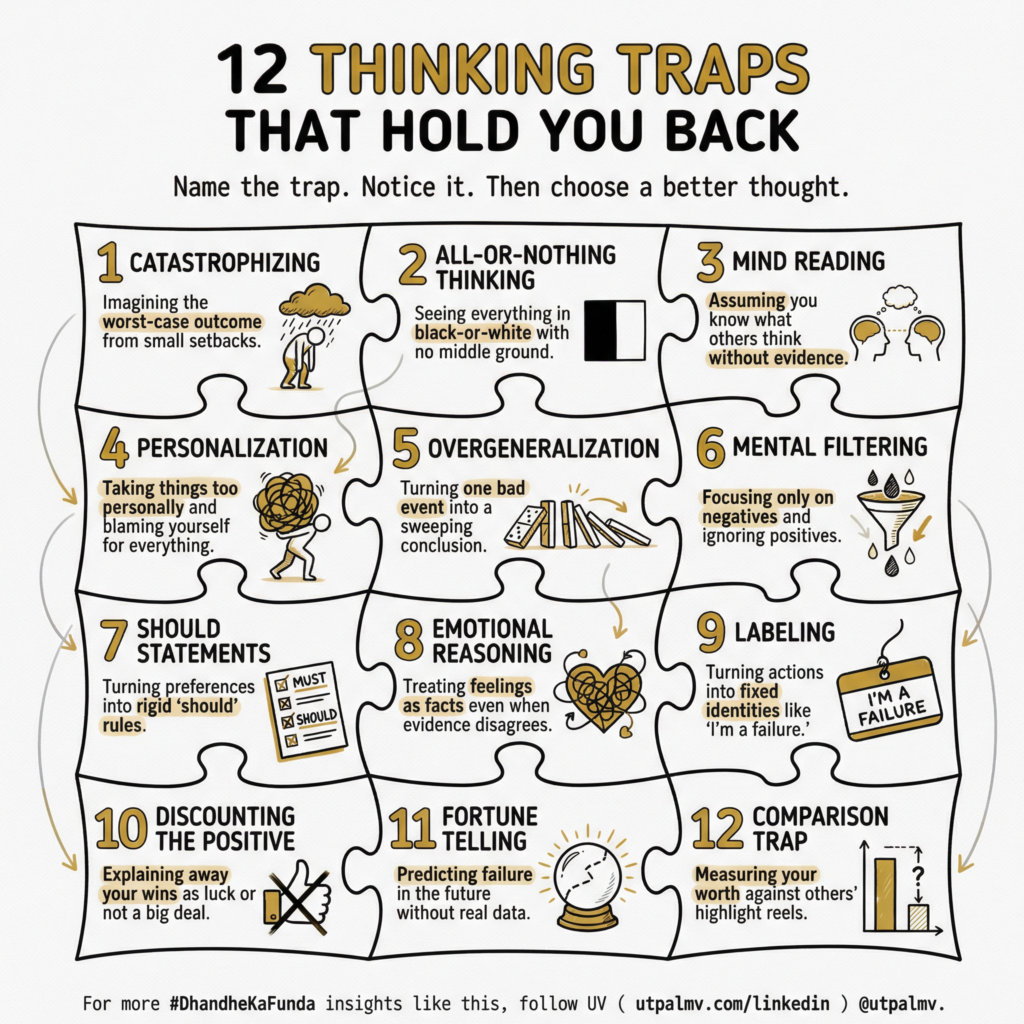
The list includes catastrophizing, all-or-nothing thinking, mind reading, personalization, overgeneralization, mental filtering, rigid “should” statements, emotional reasoning, labeling, discounting positives, fortune telling, and unhelpful comparison.
Naming a pattern may create distance from it. It does not seal a leak, override emotion, or prevent harm. Context matters, and persistent distress may deserve qualified support rather than self-debugging language.
For me, the practical sequence is modest: notice the thought, test it against available evidence, consider another interpretation, and choose the next proportionate action.
Use this workExplore with AI
Explore this journal
Take this work into your preferred AI system. Choose a ready-made prompt or add your own context. Nothing you enter here is sent or saved by utpalmv.com.
Use the work as a thinking lens without adding personal context.
Optional. Add details when you want the exploration grounded in your situation. Your context remains in this page and is included only in the prompt you copy.