I have sometimes confused empathy with taking another person’s distress into myself.
The impulse looks caring. If someone is anxious, disappointed, or overwhelmed, I try to feel the situation from inside their experience. That can help me notice what a detached reading would miss. It can also leave me less able to listen, because my attention shifts from what they are living to what their emotion is doing to me.
The distinction I am learning is between contact and absorption.
Contact means staying close enough to understand something of the other person’s context, words, and constraints. Absorption means treating my version of their feeling as if it were theirs, then carrying it as my responsibility. The first can support care. The second can produce confusion, resentment, or a rescue they did not ask for.
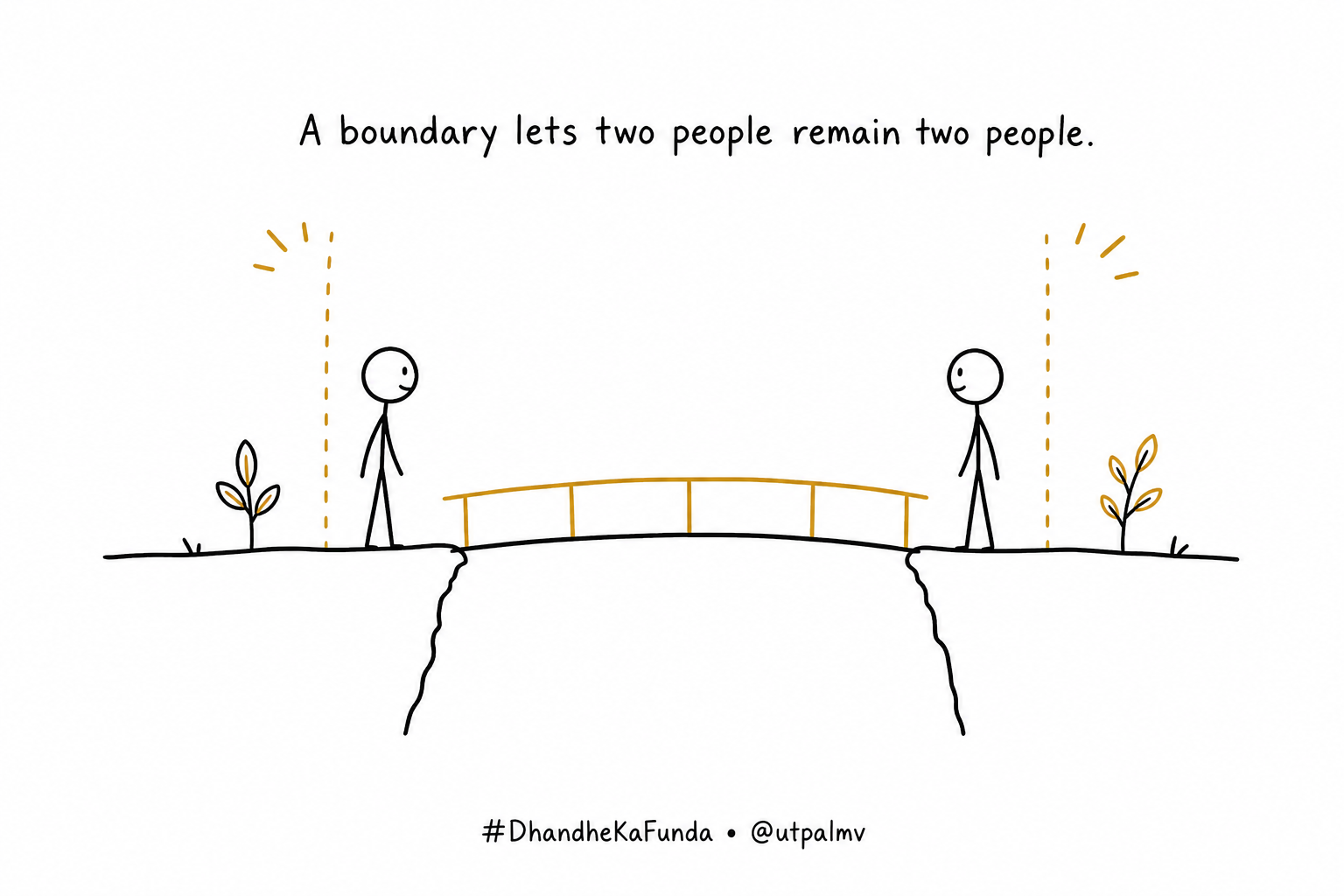
A boundary does not make empathy cold. It lets two people remain two people.
In practice, that may mean asking rather than assuming: What happened? What matters most right now? Do you want listening, help thinking, or a concrete action? It may mean acknowledging an emotion without claiming to know its depth. It may also mean being honest about what I can offer and what I cannot.
This is not only a leadership matter. Rank does not give one person the role of stable anchor and everyone else the role of emotional weather. A colleague, friend, founder, or team member may need support and may also have resources, choices, and knowledge that I do not see.
There are moments when I will still be affected. Boundaries are not impermeability, and composure is not proof of wisdom. If the situation overwhelms my capacity, I may need help or distance before I can be useful.
The aim is not to avoid feeling. It is to remain present without converting another person’s experience into my identity or project. Empathy becomes more honest when it includes both connection and separation.