

On March 14, 2026, I wrote that a founder cannot hire their way out of their own flaws. I was trying to name a real pattern: behavior at the top can travel through an organization.
What a founder rewards, tolerates, avoids, and repeats affects decisions elsewhere. If I punish bad news, I should not be surprised when information arrives late. If every important choice waits for me, hiring more people will not create autonomy. If I speak about focus while changing direction every week, the contradiction becomes part of the working environment.
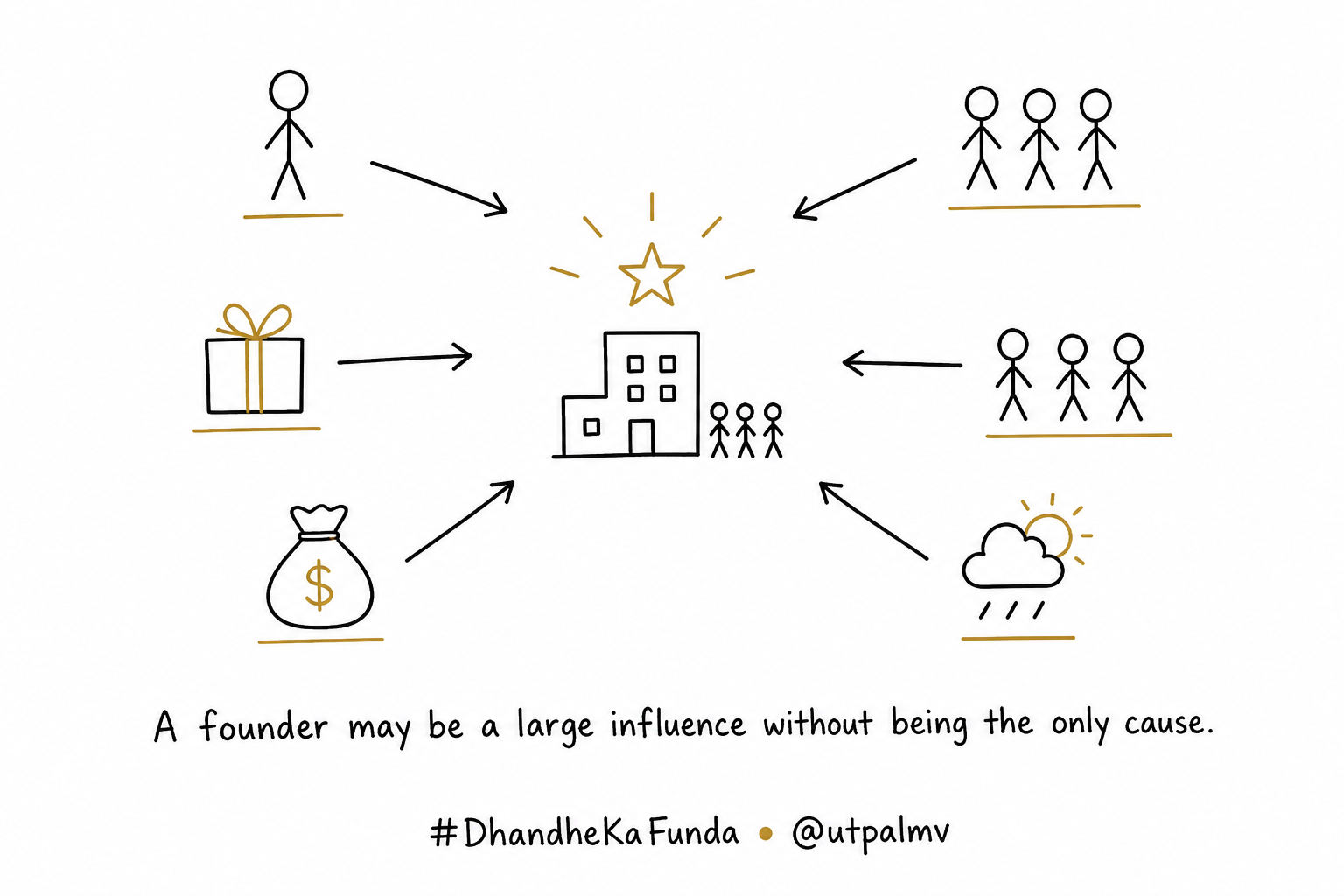
The metaphor of a founder as source code goes too far, though. A company is not a faithful execution of one person’s character. It is shaped by colleagues, customers, investors, incentives, law, history, luck, and material conditions. Employees interpret, resist, repair, and create. Sometimes they protect the organization from the founder.
That distinction matters because self-examination can become vanity in another form. If I assume every result mirrors me, I remain at the center even while appearing to take responsibility.
The more useful audit is specific. Which decisions require my approval? What behavior am I rewarding through attention, money, or access? Where does the team have authority in name but not in practice? What evidence connects my conduct to the outcome I am concerned about? What part belongs to another cause?
Character matters, especially when power makes one person’s habits expensive for others. Integrity is visible when it costs something, but cost alone does not prove integrity. Confidence may steady a difficult moment, but certainty can also suppress necessary doubt. Purpose can orient decisions, but it cannot replace clear roles, safe disagreement, and competent execution.
I remain one influence on the company, sometimes a large one. My responsibility is to understand that influence without mistaking it for total authorship. The organization becomes healthier when its ability to notice and correct problems does not depend on the founder first correcting himself.
Use this workExplore with AI
Explore this journal
Take this work into your preferred AI system. Choose a ready-made prompt or add your own context. Nothing you enter here is sent or saved by utpalmv.com.
Use the work as a thinking lens without adding personal context.
Optional. Add details when you want the exploration grounded in your situation. Your context remains in this page and is included only in the prompt you copy.