

A team listens differently when something has gone wrong.
The server has failed, a client has left, or a deadline has been missed. People are already trying to understand the damage. In that moment, a leader's first words can widen the problem or make the next action easier to see.
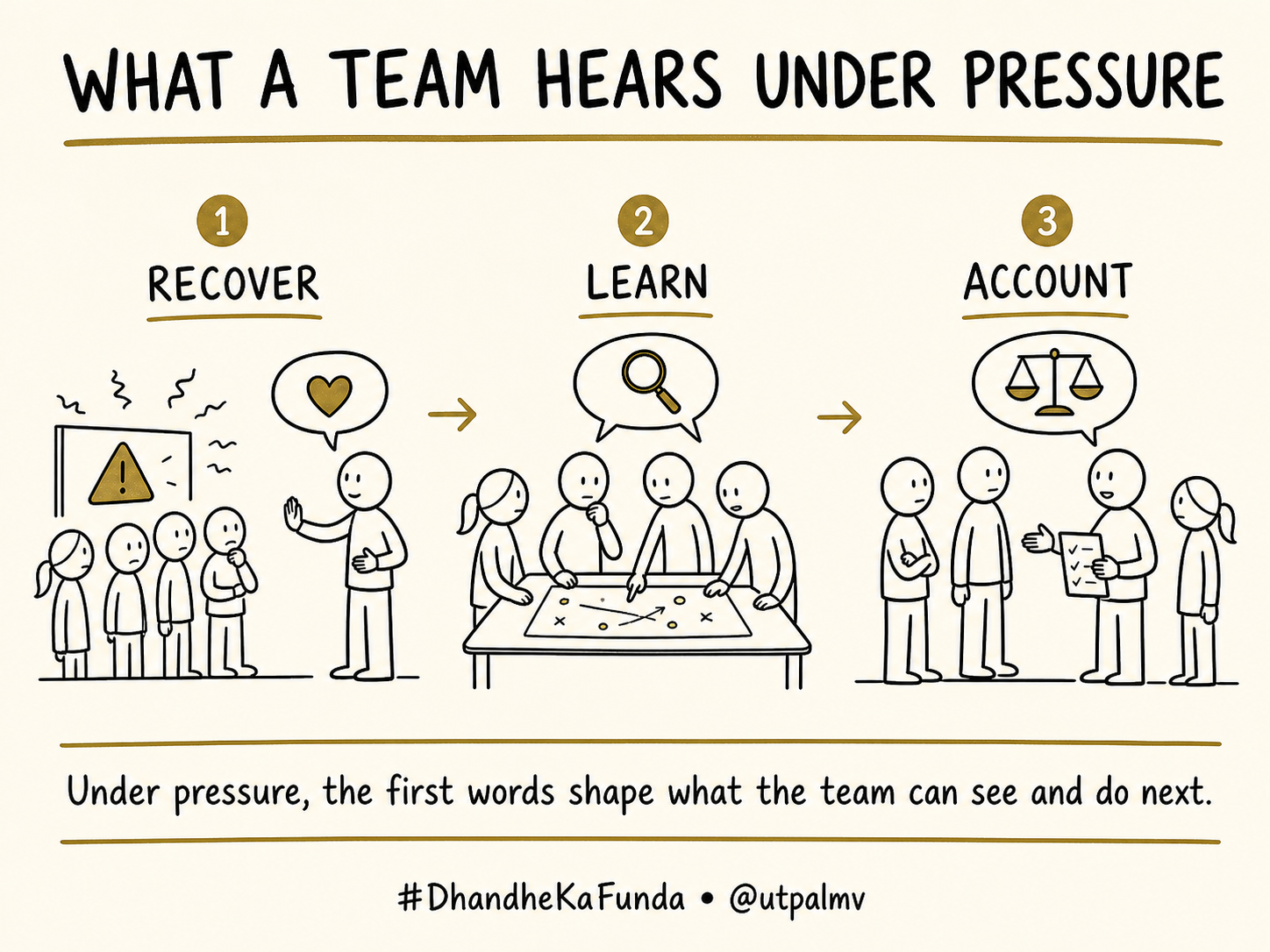
“Who did this?” may be a necessary question later, particularly when responsibility has been avoided or trust has been broken. Asked first, it often turns attention toward self-protection. People begin assembling explanations before they have stabilized the situation.
“What do we need to do next?” creates a different sequence. It does not erase accountability. It separates immediate recovery from the later examination of causes, decisions, and ownership.
The same distinction appears in other familiar responses. “Figure it out” may communicate confidence, but it can also abandon someone who lacks information or authority. “What support do you need?” does not promise rescue. It reveals whether the constraint is capability, access, time, or a decision that only somebody else can make.
“This should never have happened” expresses frustration without yet producing learning. A more useful question is, “What would reduce the chance or impact of this happening again?” Some failures cannot be eliminated. They can still be detected earlier, contained better, or recovered from faster.
Calm language alone is not leadership. A composed sentence followed by avoidance, secrecy, or delayed decisions will not create trust. Nor should warmth become a way to evade a difficult performance conversation. The language matters because it sets the conditions for the work that must follow.
Under pressure, the team is listening for more than tone. People want to know whether the problem can be named, whether help is available, whether responsibility will be handled fairly, and whether the person leading them can stay close to reality.
The aim is not to sound calm. It is to help the team see and do the next necessary thing without making fear another problem they must manage.
Use this workExplore with AI
Explore this journal
Take this work into your preferred AI system. Choose a ready-made prompt or add your own context. Nothing you enter here is sent or saved by utpalmv.com.
Use the work as a thinking lens without adding personal context.
Optional. Add details when you want the exploration grounded in your situation. Your context remains in this page and is included only in the prompt you copy.