

Advice can be generous and still arrive at the wrong time.
We see a person struggling with a decision, a relationship, or a piece of work. Something in their situation resembles something we have experienced. The answer feels obvious to us, so we offer it before finding out whether they want it.
The problem is not that unsolicited advice is always wrong. Sometimes an outside view catches a risk the person cannot see. Sometimes friendship requires saying the uncomfortable thing without waiting for an invitation. But much ordinary advice is given with too little context and too much confidence.
What worked for me may depend on resources, timing, temperament, obligations, or luck that are absent for somebody else. A lesson extracted from my experience is not yet an answer to their situation.
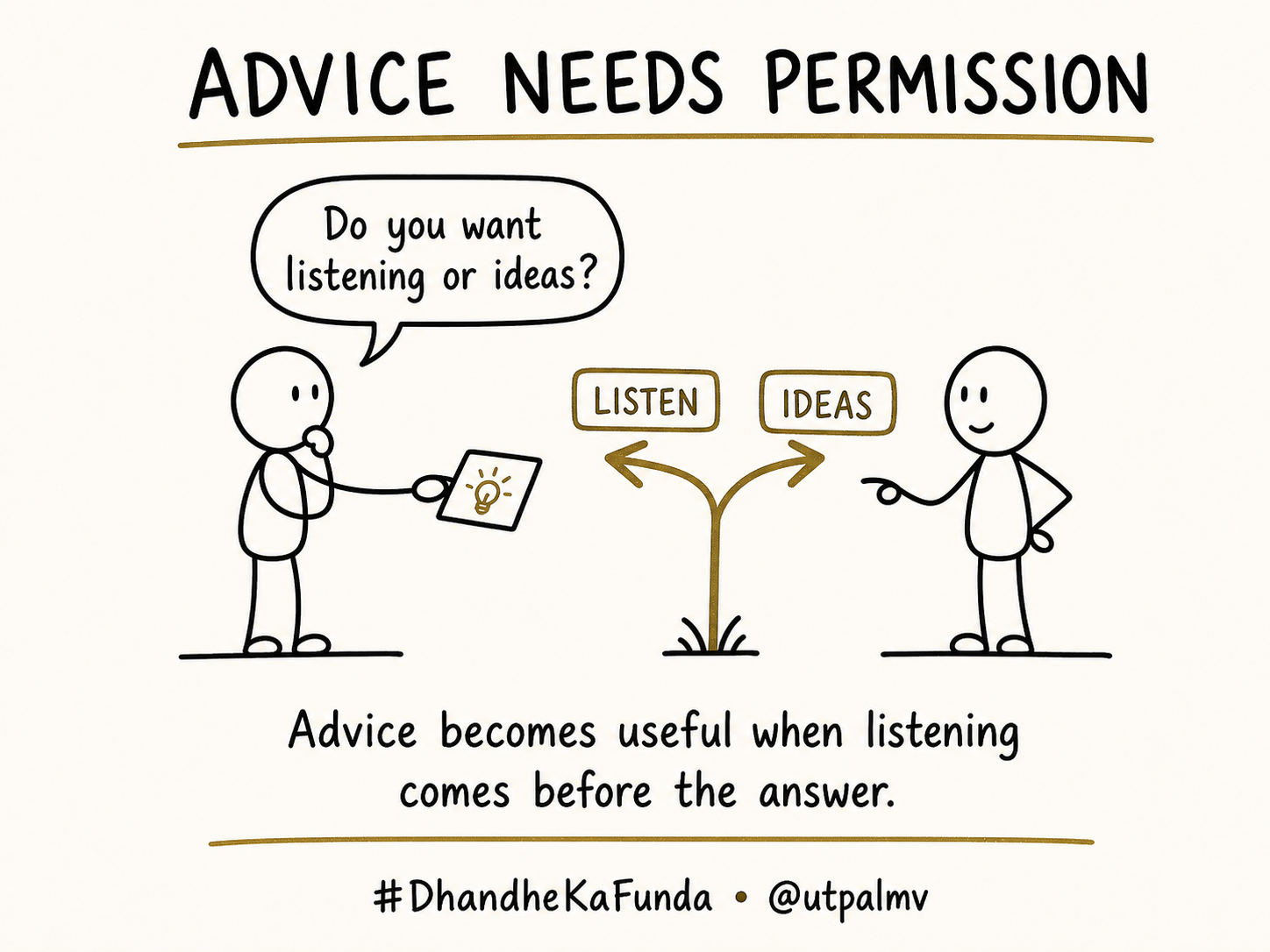
This is why permission changes the conversation. “Would another perspective be useful?” gives the other person room to say yes, no, or not yet. “Are you looking for ideas, or do you want me to listen?” distinguishes a request for help from a request for company. A sincere question does not merely make advice more polite. It improves the information on which the advice will be based.
Demonstration also has a place. When people can observe how someone works, handles a setback, or makes a difficult choice, they can decide what is worth asking about. The result should not be treated as proof that the method will transfer. It is evidence that a question may be worth exploring.
There are exceptions. A serious safety risk, an ethical breach, or an obligation of care may require speaking before permission is granted. Even then, urgency does not excuse exaggeration. Say what you observed, explain the concern, and distinguish what you know from what you fear.
The useful discipline is not silence. It is attention to the relationship. Does this person want an answer? Do I understand enough of the situation? Am I sharing something that may help, or am I trying to establish that I know better?
Advice becomes more useful when it begins with listening and leaves the receiver free to decide.
Use this workExplore with AI
Explore this journal
Take this work into your preferred AI system. Choose a ready-made prompt or add your own context. Nothing you enter here is sent or saved by utpalmv.com.
Use the work as a thinking lens without adding personal context.
Optional. Add details when you want the exploration grounded in your situation. Your context remains in this page and is included only in the prompt you copy.